
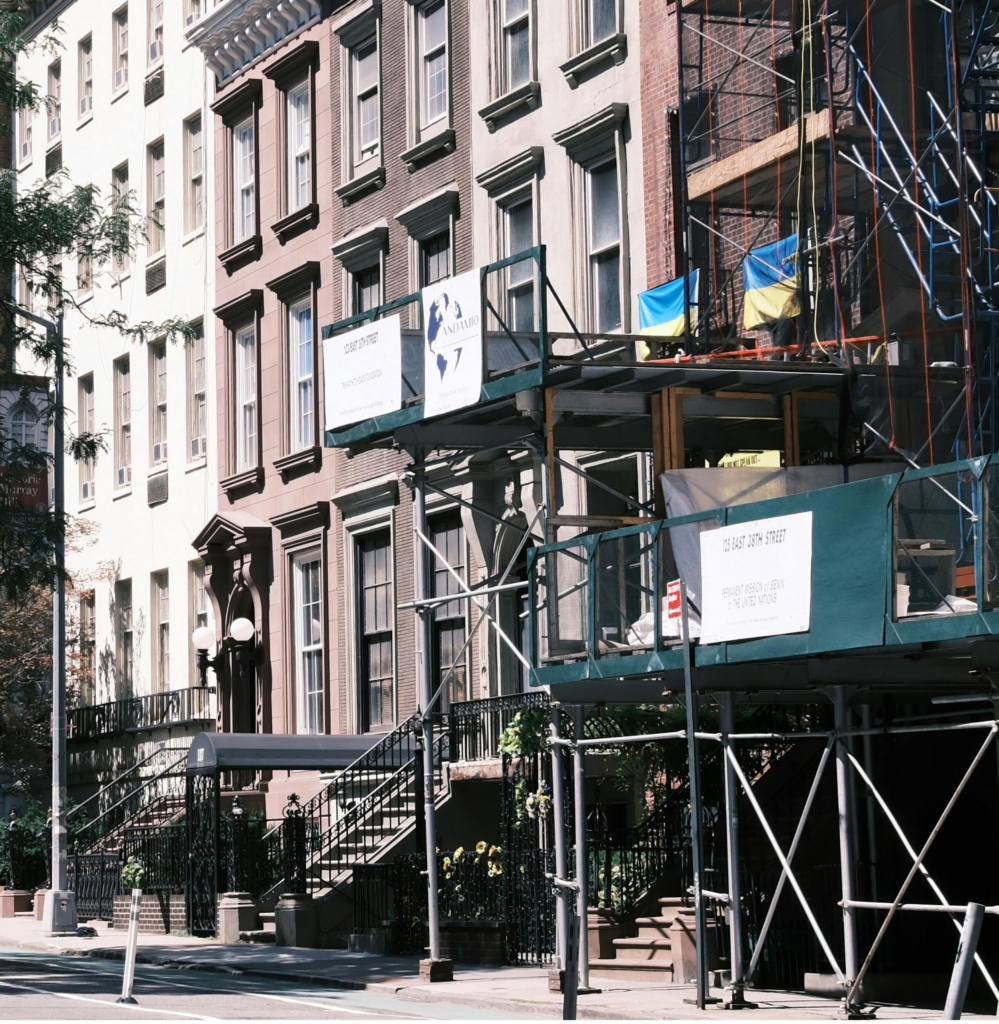
New Yorkers have learned to live under steel and plywood.
For years, the city’s sidewalks have been shrouded by a canopy of dim green tunnels stretching for hundreds of miles. What began as a temporary safety measure has turned into semi-permanent infrastructure.
Now with Local Law 47 of 2025, the Department of Buildings is working to put a light to those structures. As of this writing it’s the city’s first real attempt to rethink how sidewalk sheds look, feel, and fit within the streetscape. Whether it changes the deeper problem is another story.
The Scale of the Problem
There are more than 400 miles of active sidewalk sheds across New York City: enough to wrap the outer boroughs twice over. They were built for protection, shielding pedestrians from falling debris during façade or structural work. But as repair cycles drag on, many have outlived the very hazards they were meant to guard against.
They darken sidewalks, hide storefronts, and make whole neighborhoods feel perpetually under construction. For a city built on vertical ambition, the ground plane has become a work zone without an end date.
What the Law Actually Changes
Local Law 47 doesn’t remove sheds but instead takes aim at their design. Features for more recent designs include:
Higher clearance with a new minimum of 12 feet to reduce the low-ceiling tunnel effect.
Better lighting and daylight-responsive fixtures to eliminate the cave-like gloom.
Color flexibility where green is (thankfully) no longer mandatory and sheds can match the façade or use lighter tones.
Containment netting to be used in some cases, while mesh can replace full overhead decking, reducing bulk.
A full design overhaul expected from DOB by September 30, 2025, with revised standards for structure, safety, and appearance.
These shifts acknowledge something New York hasn’t said aloud in decades: that safety and civic experience shouldn’t be mutually exclusive.
Progress, Not a Cure
A more attractive shed is progress, but it doesn’t solve the real issue of why sheds stay up so long in the first place.
Permitting delays, high mobilization costs, and financing gaps all slow façade repair work. For many owners, sheds act as cheap insurance while they wait for capital or city approvals. FISP’s five-year inspection cycle compounds the problem, continually revealing new repairs faster than they can be funded.
Until the city enforces repair deadlines and offers financial or procedural relief, the sheds will remain — cleaner and brighter, perhaps, but still standing.
What Local Law 47 Needs to Succeed
If New York truly wants its sidewalks back, design reform must be the first step in a larger plan. The law will need complementary measures:
Firm repair timelines and penalties aligned with Local Law 51.
Accessible financing for small and nonprofit owners through low-interest loans or tax incentives.
Streamlined permitting so responsible owners aren’t punished by red tape.
Rewards for early removal, such as fee reductions or faster approvals.
Without that support, the city risks modernizing the symptom instead of curing the cause.
A City Ready for Open Skies Again
Local Law 47 is more than an aesthetic update; it signals that New York is ready to value its public realm again. The next step is turning temporary protection back into what it was always meant to be: temporary.
The goal for New York isn’t better sheds.It’s fewer of them.
The future of New York’s streets won’t be defined by how good a scaffold looks, but by how quickly we can live without one.